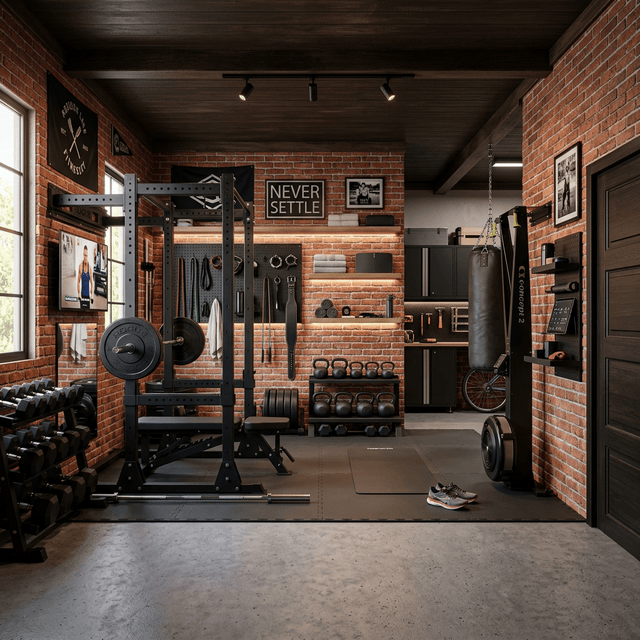
Home Gym Essentials for UK Bodybuilders (Space Saving)
The Ultimate UK Garage Gym: Essentials for Serious Gains
The landscape of natural bodybuilding within the United Kingdom has undergone a fundamental paradigm shift between 2020 and 2026, transitioning from a reliance on centralized commercial “Globo” gyms to the sophisticated development of high-performance residential sanctuaries. This evolution is driven by advancements in equipment miniaturization, digital resistance technology, and a deeper scientific understanding of hypertrophic stimuli. For the UK-based practitioner, finding the best home gym essentials uk is not merely a matter of convenience but a complex engineering challenge necessitated by the unique constraints of British housing—characterized by compact garage dimensions, historical Victorian timber joists, and stringent regulatory frameworks regarding planning and thermal efficiency.
If you are a serious athlete building a dedicated lifting sanctuary within a standard UK garage or spare room, maximizing every square inch of your available space is paramount to facilitating unhindered muscle growth. This comprehensive technical guide details the precise architectural strategies, physiological realities, and non-negotiable equipment required to construct a professional-grade hypertrophy environment at home.
Structural Integrity and Spatial Logistics in the UK Residential Context
The primary hurdle in establishing a professional-grade bodybuilding environment within a UK home is the physical footprint. The typical UK single garage or spare bedroom necessitates a meticulous approach to spatial geometry. Research indicates that a functional weightlifting setup—comprising a power rack or squat stand, barbell, bench, and plates—requires a minimum footprint of approximately 8ft x 7ft. However, this “minimum” often fails to account for the dynamic clearance required for safe operation. A standard Olympic barbell measures 220cm (approx. 7.2ft), and the act of loading 45lb (20kg) plates requires significant lateral space to prevent collisions with walls or storage units. Consequently, a width of at least 9ft is strictly recommended to ensure both safety and the integrity of the surrounding structure during maximal exertion.
Garage Conversion Engineering and Regulatory Compliance
In the United Kingdom, the conversion of a garage into a fitness facility is largely governed by Permitted Development Rights. Most internal conversions do not require full planning permission provided the external structure remains unchanged. However, critical exceptions exist for listed buildings, properties within conservation areas, or new builds where “change of use” restrictive covenants are in place to preserve parking capacity. Ignorance of these covenants can lead to severe legal and financial repercussions.
Compliance with Building Regulations is a separate, mandatory requirement, particularly concerning insulation and ventilation. To prevent the rapid oxidation of steel equipment and the accumulation of moisture, the facility must adhere to specific thermal U-values. The floor must be enhanced with damp-proof membranes (liquid or sheet) that connect to the existing wall damp-proof course, while insulation levels must target stringent metrics to maintain ambient stability.
- Garage Walls: Target U-Value of 0.28 W/m2K, typically achieved via 100mm blockwork and 100mm high-performance insulation.
- Conversion Floor: Target U-Value of 0.22 W/m2K, necessitating approximately 100mm polyurethane foam insulation.
- Roof / Ceiling: Target U-Value of 0.16 W/m2K, variable by pitch but requiring dedicated damp protection.
- Ventilation: A mandatory background ventilation rate to mitigate airborne moisture accumulation.
To crystallize these regulatory and engineering requirements, the following table outlines the strict thermal targets necessary for a compliant and functional UK garage conversion:
| Structural Element | Target U-Value (W/m2K) | Technical Specification Requirement |
|---|---|---|
| Garage Walls | 0.28 | Typically 100mm blockwork + 100mm high-performance insulation |
| Conversion Floor | 0.22 | Approx. 100mm polyurethane foam insulation |
| Roof / Ceiling | 0.16 | Varies by pitch; requires dedicated damp protection |
| Ventilation | N/A | Background ventilation rate of 8000mm2 |
Furthermore, fire safety and escape routes are paramount. Any converted space must maintain a clear openable window area of at least 0.33m2, with dimensions no less than 450mm in width or height, positioned no more than 1100mm from the finished floor level to allow for emergency egress.
Upper Floor Loading and Joist Mechanics
For bodybuilders utilizing spare bedrooms on first or second floors, structural load capacity is the absolute most significant safety variable. Standard UK residential floors are designed to support distributed loads of approximately 1.5 kN/m2 (150 kg/m2). While this suffices for standard furniture, bodybuilding equipment creates high-density point loads. A loaded squat rack, a heavy barbell, and a high-bodyweight lifter concentrated in a small 4ft x 4ft area can severely stress timber joists over time, causing structural bowing, creaking, or failure.
Analysis of Victorian properties reveals that joist spans of 4 meters or more are often already “over-spanned” according to modern domestic tables, which typically cap achievement at 3 meters for standard timber dimensions. Exceeding these limits leads to excessive floor deflection, vibrational harmonics that can damage plasterwork in the rooms below, and in extreme cases, acute structural failure under drop-loads. Mitigation strategies must include distributing weight across as many perpendicular joists as possible and utilizing load-spreading subfloors. Typically, this is achieved by laying 18mm or 24mm structural plywood sheets installed directly beneath high-density, vulcanized rubber matting to disperse kinetic energy and dead weight.
The Physiology of Hypertrophy in Constrained Environments
A prevalent myth suggests that the absence of heavy commercial machinery permanently compromises hypertrophic potential. However, sports science research has decisively confirmed that muscle growth is entirely agnostic to the equipment’s origin, provided the mechanical tension, progressive overload, and metabolic stress are sufficient to stimulate an adaptive response. Your muscle fibers do not possess the cognitive capacity to differentiate between an expensive commercial selectorized machine and a pair of heavily loaded adjustable dumbbells.
Machines vs. Free Weights: The Parity of Growth
Recent meta-analyses of multiple independent studies found no statistically significant difference in muscle hypertrophy between free-weight and machine-based training when intra-set exertion levels were equated. For the home bodybuilder, this validates the use of space-saving cable towers, functional trainers, and digital resistance systems. While free weights are often preferred for their requirement of recruiting stabilizing musculature, machines allow for a higher degree of localized stability. This enhanced stability can actually improve the lifter’s ability to push the primary mover to absolute failure safely, entirely removing the necessity for a live spotter during heavy, near-maximal attempts.
Furthermore, machines offer unique biomechanical advantages for specific tissue targeting. For example, a dedicated leg extension machine targets the rectus femoris more effectively than a traditional barbell back squat, as the squat does not provide the same degree of knee extension under load for that specific quadricep head. Identifying these nuances allows the home gym athlete to program with forensic precision.
Optimal Volume and the Minimum Effective Dose
For the natural bodybuilder operating in a garage gym environment, managing recovery logistics is as crucial as the training stimulus itself. Research strongly indicates that the optimal training volume for muscle hypertrophy generally falls between 5 and 10 hard sets per muscle group per week. While marginal gains can sometimes continue up to 20 sets per week for advanced practitioners, the rate of return diminishes significantly, and the risk of systemic overtraining increases exponentially in a home setting where advanced recovery modalities (like ice baths or massage therapists) may be less accessible than in elite performance facilities.
The “minimum effective dose” for maintaining or even slightly increasing muscle mass is surprisingly low, found to be approximately 4 sets per muscle group per week. This data point is critical for UK professionals whose gym time may be periodically constrained by intense domestic or vocational commitments, proving that long-duration workouts are not strictly required for progress.
| Muscle Group | Optimal Rep Range | Weekly Volume (Sets) | Predominant Fiber Type |
|---|---|---|---|
| Pectoralis Major | 4 - 12 | 5 - 10 | Type IIa/IIx |
| Latissimus Dorsi | 4 - 12 | 5 - 10 | Mixed |
| Quadriceps | 4 - 12 | 5 - 10 | Type I/IIa |
| Biceps Brachii | 6 - 15 | 3 - 5 | Type II |
| Triceps Brachii | 6 - 15 | 3 - 5 | Type II |
The Circadian Rhythm of Protein Synthesis
The exact timing of nutrient intake in strict relation to resistance training—once an unshakeable cornerstone of legacy “bro-science”—has been heavily re-evaluated through advanced 2024-2025 clinical studies. While the mythical “anabolic window” is significantly wider than previously claimed, muscle protein synthesis (MPS) remains heavily and significantly elevated for 24 to 36 hours immediately post-exercise, steadily returning to a resting baseline by the 48-hour mark.
This physiological reality strongly supports a dedicated training frequency of at least twice per week per muscle group to successfully maintain a chronic, unbroken state of elevated protein synthesis. Regarding optimal protein dosage in a home setting, while 20g-25g per feeding was once strictly considered the absolute biological ceiling, recent conclusive data suggests that significantly larger solitary doses (up to a massive 100g) can reliably result in a much more prolonged, sustained anabolic response, particularly after highly demanding, total-body garage conditioning sessions.
Home Gym Essentials UK: Hardware for Space-Constrained Bodybuilding
Selecting equipment for a UK home gym requires an unforgiving focus on modularity, verticality, and extreme durability. The objective is to maximize the variety of biomechanical angles and exercises available while ruthlessly minimizing the permanent floor footprint. This is where an objective adjustable dumbbells review and an analysis of a power rack for garage environments become essential.
Adjustable Dumbbells: The Space-Saving Foundation
The absolute most critical component of a space-saving gym is a set of premium, high-quality adjustable dumbbells. These dynamic units can seamlessly replace a full commercial rack of 20 to 30 fixed pairs of dumbbells, saving upwards of 15 to 20 square feet of highly valuable floor space. For anyone serious about training at home bodybuilding, these are non-negotiable.
- Ironmaster Quick-Lock: These are engineered precisely for the “lifetime” lifter. Constructed from cast iron and chrome-plated steel with zero fragile plastic parts, they are virtually indestructible. They can be dropped repeatedly during heavy presses without fear of mechanism failure. While the threaded screw-lock system is marginally slower to adjust than modern dial-systems, it allows for massive, unprecedented expansions—up to 165lbs (75kg) per dumbbell—making them the only viable choice for elite-level heavy bodybuilding in a residential setting.
- PowerBlock: Utilizing a proprietary “caged” design and a magnetic pin-selector system, PowerBlocks are renowned for their rugged durability and ultra-compact dimensions. The Elite and Pro series are fully expandable, allowing a novice lifter to start with a 50lb set and grow to 90lb or more as their absolute strength increases over the years. The flat, square shape prevents rolling on uneven garage floors, which is highly beneficial for floor-based exercises like renegade rows or dumbbell push-ups.
- Nuobell (SMRTFT): These represent the “premium natural feel” category. Using an innovative twist-handle mechanism, they adjust in 5lb or 2kg increments almost instantaneously. The latest models include a 100lb version, addressing previous valid criticisms that the 80lb limit was insufficient for advanced chest and back pulling movements. However, the inclusion of internal plastic components in the adjustment dial makes them highly susceptible to fatal damage if dropped, a significant consideration for those training in garages with unforgiving solid concrete floors.
Folding Squat Racks and Wall-Mounted Solutions
The heavy power rack is the central nervous system of any strength training facility, but its vast footprint is often entirely incompatible with a multi-use garage or spare room. Folding racks elegantly address this profound issue by utilizing vertical wall space to stow away when not actively bearing load, representing the pinnacle of space saving gym equipment.
- Iron King SR-FB70: Manufactured natively in Birmingham, UK, this heavyweight rack uses exceptional 70mm x 70mm x 3mm high-grade steel. It folds inward or outward on robust hinges, and its highly sought-after “Westside” hole spacing (25mm gaps through the critical bench and pull area) allows for forensic precision in safety spotter and J-cup positioning. This precision is vital for isolated bodybuilding movements like the heavy pin press or rack pull.
- PRx Performance Profile PRO: This revolutionary rack is unique for its upward-folding mechanism completely assisted by heavy-duty gas shocks. It requires an astonishingly low 4 inches of depth off the wall when stowed, making it arguably the most space-efficient professional rack on the global market. Despite its folding nature, it can confidently support up to 1,000 lbs, making it perfectly suitable for even the strongest, most genetically gifted competitive bodybuilders.
- Strength Shop Riot Cage: While not a strictly folding rack, the heavily reinforced Riot series is specifically designed with a smaller overall footprint and critically lower height options (210cm) specifically tailored for standard UK garages with restrictive low ceilings. It is highly regarded for its tremendous lateral stability and the inclusion of dense adjustable spotter bars, which are absolutely essential for athletes training to failure solo.
Digital and Smart Resistance Systems
The market has seen the maturation of highly advanced digital weight systems like Tonal or Vitruvian. By using complex electromagnetic resistance motors instead of gravity, these units provide up to 250 lbs or more of digital, adaptive weight in a wall-mounted or floor-based unit the size of a large television or a small stepboard.
The primary physiological advantage for bodybuilders here is the revolutionary “dynamic weight” feature. Digital systems can actively increase resistance exclusively during the eccentric (lowering) phase of a lift or perfectly synthesize a “chains” effect where the weight progressively increases at the top of the movement’s strength curve. This dynamically maximizes mechanical tension throughout the entire, literal range of motion, a feat exceedingly difficult to achieve with traditional static iron without highly complex, time-consuming setups.
Conditioning and Aerobic Capacity Tools
While the intense focus of hypertrophy training is building contractile tissue, maintaining cardiovascular health and optimizing “NEAT” (Non-Exercise Activity Thermogenesis) are undeniably critical for precise weight management, nutrient partitioning, and overall heart health, especially during aggressive cutting phases. In a genuinely space-saving gym, cardio equipment must be either exceptionally compact or vertically stowable.
- Concept2 RowErg: An absolute staple of elite functional fitness and rowing, the RowErg is prized globally for its mechanical reliability and its unique ability to be separated into two manageable pieces or stood vertically on its nose against a wall when not in use, taking up virtually zero floor space.
- AssaultBike Classic: Known infamously for its “calorie-torching” intensity and brutality, the AssaultBike is a robust, purely mechanical, no-nonsense machine that utilizes infinite air resistance. While it has a slightly larger static footprint than a stowed rower, its heavy-duty durability and total lack of delicate electronic complexity make it ideal for enduring the cold, highly humid environments typical of unheated UK garages.
- Wattbike Atom: For those who heavily prefer immersive, data-driven cardiovascular work, the Wattbike provides an “industry-standard” elite riding experience. The Wattbike Atom is particularly noted for its sophisticated electromagnetic resistance which precisely mimics outdoor road riding with extreme mechanical accuracy, though it operates as a fixed, heavy unit that requires a small but permanent allocation of floor space.
Environmental Protection and Asset Maintenance
The notoriously damp, volatile UK climate presents a unique and constant threat to home gym equipment: moisture-induced oxidation, commonly known as rust. High-carbon steel barbells and standard cast iron plates are acutely susceptible to rapid degradation in the highly humid, fluctuating conditions of a standard, poorly insulated brick garage.
Barbell Coatings and Corrosion Resistance
The precise protective finish on a barbell determines both its long-term longevity and its tactile “feel” in the athlete’s hand. For aggressive garage gyms, the critical choice of coating is quite literally a matter of component “survival”.
- Stainless Steel: This is undoubtedly the absolute pinnacle of barbell finishes. It naturally resists severe rust better than almost any applied coating and provides a raw, extremely aggressive and grippy knurling feel because there involves no secondary layer of zinc or chrome “filling in” the sharp texture of the steel.
- Cerakote: A military-grade ceramic-based finish widely utilized in the modern firearm industry. It offers exceptional, proven corrosion resistance and is widely available in various custom colors, making it highly popular for heavily stylized, themed home gyms. It very slightly softens the aggressive knurling feel, which some volume lifters actually find more manageable and comfortable for extended, high-rep hypertrophy sessions.
- Zinc (Bright or Black): A considerably more affordable coating that provides highly decent but temporary protection. Over time and repeated, heavy use, the microscopic zinc layer will inevitably wear away in high-friction contact areas (like the J-cups), leading directly to the aggressive development of a heavy patina or surface rust.
- Bare Steel: This raw finish should be strictly and universally avoided in UK garages unless the lifter is deeply committed to rigorous, daily oiling and maintenance. Bare steel will violently begin to rust within literal days in high-humidity British environments.
The Critical Role of Dehumidification
Active, mechanical moisture management is strictly essential. Relying on passive ventilation in a damp climate is a fool’s errand. Dehumidifiers engineered for UK home gyms are generally categorized into two highly distinct types based on their complex operating mechanism, and choosing the right one is absolutely critical for the survival of your steel assets.
- Desiccant Dehumidifiers (e.g., EcoAir DD1): These highly specialized units are vastly superior for completely unheated UK garages during the freezing winter months. Unlike standardized compressor models, they forcefully maintain their moisture extraction rate even in temperatures plunging as low as 1°C. Crucially, they emit a highly noticeable amount of ambient heat as a direct byproduct of their chemical process, which can drastically help take the “chill” out of a freezing, sub-zero garage environment.
- Compressor Dehumidifiers (e.g., MeacoDry Arete One): These are highly effective and economically efficient exclusively in temperatures consistently above 15°C. They are highly energy-efficient relative to desiccant models and often include built-in medical-grade HEPA filters to significantly improve the breathable air quality in enclosed, dusty spaces, making them ideal for highly insulated, internal room conversions.
| Dehumidifier Model | Type | Best Use Case | Key Specification |
|---|---|---|---|
| MeacoDry Arete Two | Compressor | Large insulated rooms / Modern builds | 20L/day extraction; ultra-quiet |
| EcoAir DD1 Simple | Desiccant | Uninsulated garages / Winter use | Consistent performance in cold |
| Duux Bora Smart | Compressor | Smart homes / App control | 30L/day extraction; carbon filter |
| Princess Smart 20L | Compressor | Budget-conscious garage use | Affordable smart features |
Barbell and Machine Lubrication
Strict mechanical maintenance should follow a rigid, non-negotiable monthly cadence. Practitioners must aggressively use a stiff nylon brush (never a steel wire brush, which instantly destroys coatings) to aggressively remove compacted lifting chalk—which is highly hydrophilic and violently traps moisture—from deep within the knurling.
The meticulous application of 3-in-1 oil or a dedicated, military-spec metal protectant (like Eezox or Break Free CLP) artificially creates a microscopic barrier against atmospheric oxygen. 3-in-1 oil is specifically and highly recommended for thoroughly lubricating the internal brass bushings or needle bearings hidden inside the heavy barbell sleeves, as its precise drip spout allows for surgical application deeply between the rotating sleeve and the stationary shaft. While WD-40 is highly excellent for rapidly “loosening” heavily stuck parts or aggressively displacing standing water immediately following a deep cleaning, its actual lubricating and protecting properties are fleeting and temporary, making high-quality 3-in-1 oil the infinitely superior choice for serious, ongoing, preventative maintenance.
Advanced Intensity Techniques for Load-Constrained Lifters
Home gym natural bodybuilders often rapidly face frustrating “load ceilings,” either due to a lack of owning excessively heavy plates or hitting rigid structural floor-loading limits on upper levels. To completely circumvent these severe physical constraints, an athlete must employ highly advanced, scientific intensity techniques that violently increase the “internal” load and localized metabolic stress within the target muscle, achieving maximum hypertrophy without requiring another single pound of external physical weight.
Rest-Pause and Myo-Reps
Rest-pause training involves brutally performing a standard set completely to absolute concentric failure, resting for a tremendously brief 10-15 seconds (or precisely 10 deep, controlled breaths), and then desperately performing as many additional repetitions as humanly possible. This aggressive tactic maliciously keeps the target muscle trapped in a sustained state of exceptionally high motor unit recruitment, ensuring that absolutely every single repetition in the subsequent “mini-sets” is a highly productive “effective repetition”.
Myo-reps, a highly formalized, popularized permutation of rest-pause developed by Borge Fagerli, involve executing one extremely high-rep “activation set” (e.g., 15-20 reps to near failure) immediately followed by several gruelling clustered sets of 3-5 reps with brutally minimal rest (typically 3 to 5 deep breaths). The physiological genius here lies in bypassing the “junk volume” of early repetitions. By the end of the activation set, the muscle is fully innervated; the rapid micro-sets that follow ensure maximal tension is maintained without the massive central nervous system (CNS) fatigue associated with heavy straight sets. This methodology is incredibly, highly efficient for space-saving equipment like adjustable dumbbells, as it brutally forces a lighter, highly manageable pair of weights to feel exponentially, significantly heavier by the harrowing end of the lifting sequence.
Blood Flow Restriction (BFR) Training (Kaatsu)
BFR training (originally birthed as Kaatsu in Japan) involves precisely using tightly calibrated, specialized pneumatic cuffs to physically restrict venous blood outflow from a limb while simultaneously maintaining vital arterial blood inflow to the working muscle group. This severe physiological restriction creates a massive, localized accumulation of harsh metabolic byproducts (chiefly lactate and hydrogen ions) and artificially induces massive, high-threshold Type II muscle fiber recruitment that is typically strictly reserved for lifting much heavier, maximal loads.
The biomechanics of BFR effectively trick the brain into sensing an extreme, life-or-death hypoxic environment within the muscle bellies. Peer-reviewed clinical research overwhelmingly suggests that natural bodybuilders can achieve highly comparable, massive hypertrophy using an exceedingly low 20% to 30% of their 1-Repetition Maximum (1RM) when heavily combined with scientifically applied BFR protocols. For a dedicated UK bodybuilder training isolated in a second-floor flat where dropping heavy deadlifts or massive squats is structurally disastrous and physically impossible, BFR represents a highly viable, scientifically validated path to immense, unrestricted leg and arm growth. It is highly recommended to perform BFR at the extreme end of a session, utilizing 4 sets to failure (typically 30, 15, 15, 15 reps) with only 30 seconds of rest between bouts.
Cluster Sets and Tempo Control
Cluster sets intelligently break a traditional, continuous set into much smaller, highly intense “clusters” punctuated with incredibly brief intra-set rest periods (e.g., executing 3 sets of 2 reps with precisely 20 seconds of rest between the pairs). This highly advanced manipulation allows for the strict maintenance of exceptionally high power output and absolutely flawless mechanical form, making it exceptionally ideal and safe for heavy, neurologically demanding movements like the standing overhead press where dangerous technical breakdown is exceptionally common under continuous fatigue.
Additionally, ruthlessly controlling the “tempo” of a specific lift—specifically forcing a violently slowed eccentric (lowering) phase lasting precisely 3 to 5 agonising seconds—massively increases the total “time under tension” and raw mechanical stress applied to the tissue connective structures. This guarantees that even with a highly restricted, limited physical weight set, the dedicated bodybuilder can invariably reach the mandatory physiological threshold required to trigger immense, unstoppable hypertrophy.
Economic Analysis: Home Gym vs. Commercial Membership
While the initial, upfront cash outlay for a highly professional, fully-equipped home gym is undeniably significant, the long-term Return on Investment (ROI) is highly, mathematically compelling within the current UK economic context. A premium “bare-bones” professional setup (heavy rack, premium bar, adjustable bench, and calibrated plates) in 2026 demands approximately £2,000 to £2,500.
When directly compared to the skyrocketing average UK commercial “big box” gym membership cost—which notoriously ranges from £35 to an eye-watering £60 per month or more, ignoring arbitrary sign-up fees and mandatory yearly “maintenance” charges—the high-quality home equipment mathematically pays for itself entirely within 4 to 6 short years. Furthermore, premium iron and steel assets drastically hold their strong resale value upon liquidation, unlike a fleeting, non-transferrable monthly digital gym pass.
| Investment Type | Initial Cost (Estimated) | 10-Year Ownership Cost | Resale Value (Year 10) |
|---|---|---|---|
| Commercial Gym | £0 (Excl. Joining Fee) | £4,200 - £7,200 | £0 |
| Mid-Range Home Gym | £1,500 - £2,500 | £1,700 - £2,800 | £800 - £1,200 |
| Premium Smart Gym | £3,500 - £5,000 | £4,500 - £6,500 | £1,500 - £2,000 |
Beyond the stark financial metrics, the massive, hidden “time-cost” of commuting daily to a crowded commercial gym (averaging an exhausting 30-50 minutes round trip in dense UK traffic) needlessly burns hundreds of highly valuable hours of lost professional productivity or vital muscular recovery time annually. Furthermore, the absolute, unilateral ability to control the physical “atmosphere”—from dialing the exact music and lighting to the highly blissful absence of long, frustrating queues for a single bench press—invariably and historically leads to significantly higher, unbroken training consistency, which remains the ultimate, undisputed driver of natural bodybuilding success.
Conclusions and Strategic Recommendations
The successful establishment of a space-saving, highly advanced home gym for a dedicated UK bodybuilder is a deeply multifaceted, complex endeavor that mandates equal parts structural engineering, exercise physiology, and aggressive environmental management. To truly maximize muscular results within a frustratingly minimal physical footprint, serious practitioners must ruthlessly adopt a highly strategic approach centered solely on high-density, multi-purpose equipment and strictly evidence-based training methodologies.
- Structural Foundation First: Before irresponsibly acquiring heavy equipment, perform a comprehensive, forensic assessment of total floor loading capacity, particularly for any upper-floor installations. Aggressively distribute weight across multiple joists and permanently use thick plywood load-spreaders to fiercely safeguard the property’s structural integrity.
- Climate as a Priority: In the volatile, damp UK, a high-quality dehumidifier is absolutely not an optional accessory but a deeply core piece of critical lifting equipment. Actively protecting expensive steel assets from destructive rust through both aggressive active (heavy dehumidification) and reliable passive (3-in-1 oil, Cerakote finishes) means is highly essential for preserving long-term financial value.
- Modular Strength Tools: Unapologetically prioritize premium adjustable dumbbells (e.g., indestructible Ironmaster for heavy compound work, versatile PowerBlock for isolation) and heavy-duty folding racks (e.g., space-saving PRx or rugged Iron King) to aggressively preserve floor space without compromising a single ounce on absolute, undeniable load capacity.
- Scientific Programming: Aggressively utilize painful, highly effective intensity techniques like Myo-reps, BFR, and brutal eccentric tempo control to forcefully maximize hypertrophy when absolute, external physical load is unfortunately limited by lacking equipment or strict structural constraints.
- Regulatory Awareness: Strictly ensure any complex garage conversions fully and legally meet rigid Building Regulations for adequate ventilation and fire safety to maintain total property value and guarantee long-term lifter safety against catastrophic failure.
By deeply integrating these highly specialized, technical insights, the dedicated UK bodybuilder can masterfully construct a highly residential facility that is absolutely not merely a weak substitute for a crowded commercial gym, but a vastly superior, highly tailored, unstoppable environment for elite-level, natural hypertrophic development.
Frequently Asked Questions
1. Do adjustable dumbbells feel different than standard commercial dumbbells? Yes, but the biomechanical impact is negligible. While premium units like Ironmaster or PowerBlock have distinct shapes (square or caged) compared to traditional hex or round dumbbells, they perfectly replicate the crucial gravitational force curve. Initially, balancing a square dumbbell during a press requires a brief neurological adaptation phase, but the hypertrophic stimulus remains absolutely identical.
2. Is it safe to drop weights on a residential upper floor? Absolutely not. Even with thick 24mm high-density plywood and heavy stall mats, standard British residential joists are definitively not engineered to absorb the massive, sudden shockload of dropped barbells or heavy dumbbells. If you are training on an upper level, you must exclusively use highly controlled eccentric movements and strictly select equipment that allows for safe failure (like spotter arms) without dropping the weight.
3. Will a garage gym freeze in the UK winter? Without insulation, yes. An uninsulated brick garage will rapidly mirror external temperatures, plummeting below freezing in winter, drastically increasing severe injury risk due to cold connective tissue and dangerously stiff joints. Implementing proper heavy insulation and utilizing a desiccant, heat-producing dehumidifier paired with an aggressive dynamic warm-up protocol is non-negotiable for safe, productive winter training.